A Guide to the EU Pay Transparency Directive 2026 | Download our eGuide for free


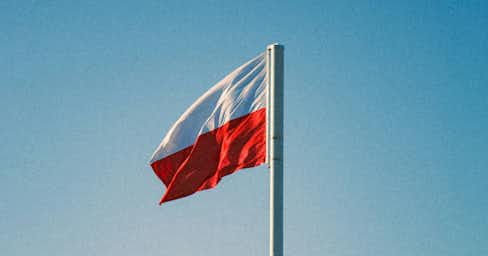
Poland: Pay Equity Landscape and EU Directive Transposition Updates
Last updated: December 22nd, 2025.
In June 2025, Poland amended its existing Labor Code to partially transpose the EU Pay Transparency Directive. Then, in December 2025, it introduced a draft act to make the final moves towards transposition.This article gives an overview of the pay equity landscape in Poland as well as more information about the new legislation.
In this page we keep track of transposition activity at the jurisdiction level. We update it regularly as the EU member states continue on their journeys towards full legal implementation of the Directive.
Pay equity in Poland
As of 2022, the average unadjusted gender pay gap across all EU nations was 12.7%—that is, women were paid 12.7% less than men. Some of the highest pay gap measurements come from Eastern European countries, with Estonia, Slovakia, Czechia, Hungary, and Latvia all coming in at over 17%.
Compared to some of its neighboring countries, Poland is a standout, with a gender pay gap of 7.8%. It also has one of the most even gender balances at the management level, with 43% of all managers being women. This was, at the time of data collection, the second highest proportion in the EU.
Poland has overarching equal pay laws that protect against gender-based pay discrimination, as well as some equal pay regulations that are specific to certain fields (like banking).
The country currently has no pay transparency legislation or gender pay gap reporting requirements. However, it has taken some steps to promote pay equity. In 2018, the government developed a software application to help employers estimate their adjusted gender pay gap (accounting for factors like education and age). Employers have been encouraged to use it to develop non-discriminatory pay policies and structures.
Partial transposition of the EU Directive
Transposition activity began in earnest in December 2024. Amendments were proposed to Poland’s Labor Code to enact a partial transposition of the Directive. The first version of these amendments were rejected, then they were revised and ultimately passed on June 4, 2025.
Here is what the new legislation will require:
- Recruitment processes must be non-discriminatory and gender-neutral, and gender-neutral language will be used in both job postings and job titles.
- Pay rates and ranges must be based on objective, gender-neutral criteria. Employers must provide pay information to job candidates either in the job posting or ahead of the interview. If they fail to do so, they must provide it prior to employment contract signing. Employers must also provide information about collective bargaining agreements or other special rules about pay. (The proposed amendments from 2024 would have required pay ranges to be provided in job postings, which would have exceeded the Directive’s requirements.)
- Employers may not ask candidates for their pay history.
While draft versions of the legislation stipulated fines for noncompliance—which goes beyond the requirements of the EU Directive—these were dropped from Poland’s final amendments.
These changes will go into effect on December 24th, 2025.
On December 16, 2025, the government introduced a draft act that, if passed, will transpose the remainder of the EU Directive into law. Like the previously passed amendments, the act would implement the pay equity and transparency regulations required by the Directive without exceeding the Directive’s scope.
This new legislation would require the following:
- All employers must create and maintain gender-neutral pay structures using at least four of the Directive’s criteria (skills, effort, responsibility, and working conditions).
- Employees would have the right to access the criteria used for determining pay and pay increases.
- Employees would have the right to request a comparison between their pay and the pay of comparable peers.
- Gender pay gap reporting would be implemented, using the specific metrics required under the Directive. Reports would be due every three years for employers with 100 or more employees and annually for those with 250 or more employees. Employers with a pay gap of 5% or more that they cannot close within six months would need to create a gender action plan.
- The Central Statistical Office will create and provide an IT tool for pay gap reporting.
- The draft legislation sets out noncompliance penalties ranging from PLN 2,000 to PLN 60,000.
This new draft act is scheduled to take effect on June 7, 2026, bringing Poland into line with the Directive right on time for the deadline.
For other EU member states updates, check out our country-level tracker.
For more information on the Directive's requirements, check our free eGuide. We also have a newly updated checklist that offers a 6-step plan to get your organization ready to meet the 2026 compliance deadine.
Further support with PayAnalytics by beqom
This is a good time for Polish employers, or any employers whose markets are responding to the EU Directive, to start preparing for implementation. Companies will need to be able to make sure that they have well-defined criteria to determine pay, that they are clear on what salary ranges they will offer for each position, and that they are ready to measure and close any gender pay gaps.
Here’s how PayAnalytics by beqom can help:
Pay equity analysis: Our software solution is ideal for any employers in the EU that want to be ahead of the curve in closing their pay gaps. User-friendly and designed by data scientists, PayAnalytics by beqom identifies your organization’s demographic pay gaps and proposes cost-effective targeted raises to close them.
Compensation assistant: If your organization has narrowed or closed its pay gap, how do you make sure that it never opens again? This requires careful calculation of each pay decision involved in hiring and promotion, which could be a time-consuming and labor-intensive process. Our compensation assistant tool automates this process, giving you ongoing support to show what any potential pay or promotion decision would do to your pay gaps.
Are you curious to see our solutions in action? Book a demo with one of our pay equity experts and discover how PayAnalytics by beqom can support your pay equity initiatives and ensure compliance with the EU Pay Transparency Directive.